Two jewelry boxes can use the same paper, the same foil logo, and the same velvet insert and still feel completely different in the hand, because the thing that shapes the first impression is how the box opens. A lid that lifts cleanly, a drawer that slides with a little resistance, a magnetic flap that snaps shut with a soft click, all of these register before a customer ever looks at the piece inside. Choosing that closure style is a spec decision, not a cosmetic afterthought, and it interacts with cost, protection, and how the box ships. Here is how the common styles compare and how to pick the right one.
Start with the board, because it decides the category
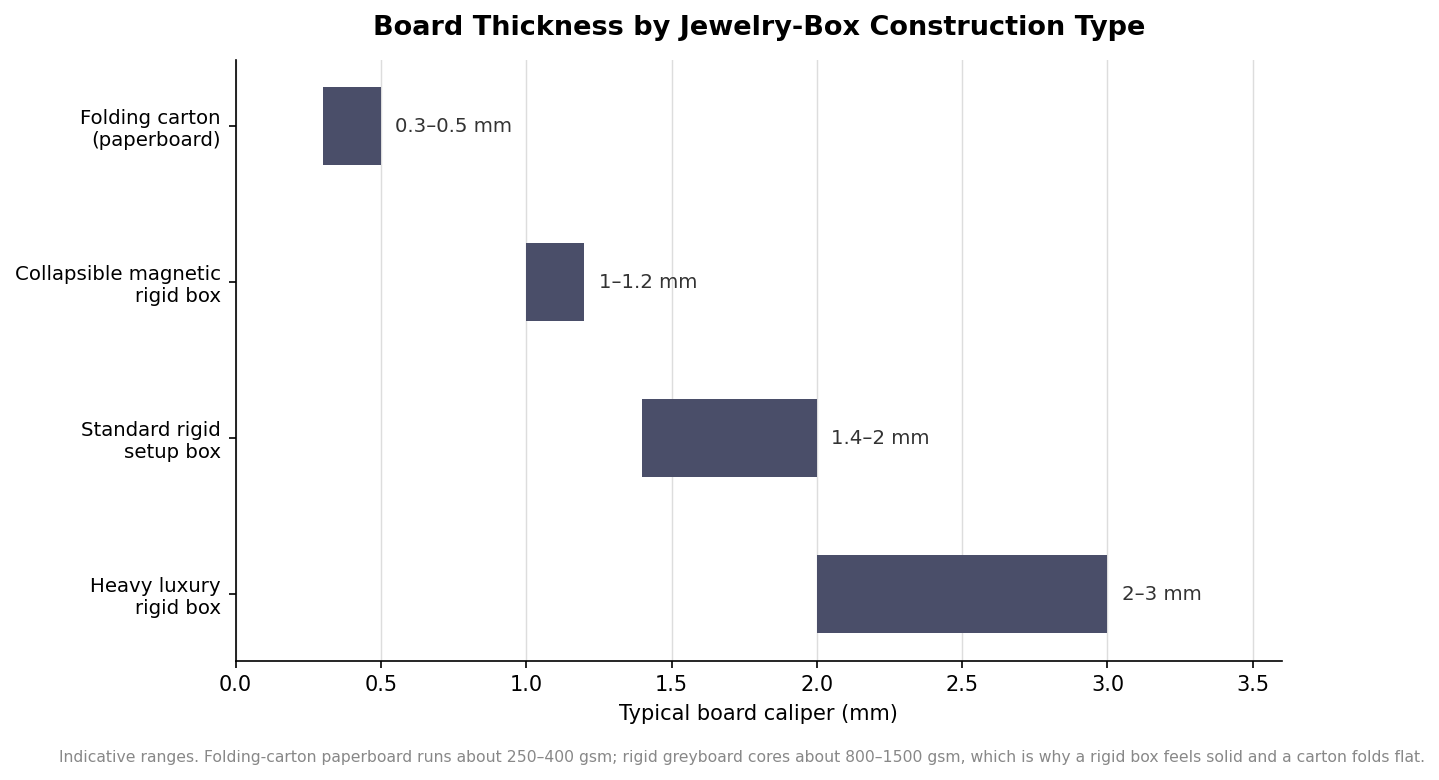
Every closure style sits on top of one of two very different structures. A folding carton is made from paperboard in the range of roughly 250 to 400 gsm, the same family of stock used for cosmetics and retail cartons. It scores and folds flat, ships flat, and costs very little per unit at volume. A rigid box, sometimes called a setup box, is built around a greyboard core in the 800 to 1500 gsm range, wrapped by hand in a decorative paper or fabric. That core is three to five times heavier than carton stock, which is exactly why a rigid box feels solid and does not collapse when you press on the lid.
Translated into thickness, the difference is easy to feel. The chart below shows typical board caliper by construction type. Folding cartons land around a third to a half of a millimeter, while rigid setup boxes run from about 1.4 up to 3 millimeters on the heaviest luxury builds. The practical takeaway is that closure styles like a two-piece lift-off lid or a slide drawer only exist in the rigid world; a folding carton can carry a tuck flap or a simple lid but cannot deliver the weighty, structured open that jewelry buyers associate with a gift.
The five closure styles and what each does well
The two-piece lift-off lid, also called a telescoping or shoulder box, is the traditional jewelry box: a base and a separate lid that fits over it. It reads as premium, protects the contents well because the lid fully encloses the base, and gives you a clean surface for foil stamping on the top. Its drawback is logistics, since it arrives fully assembled and cannot be flattened, which raises shipping and storage cost.
The magnetic collapsible lid box has become the default for gifting and PR kits for a reason. A hinged, magnet-closed lid gives a satisfying snap and a flat printable top, and the better versions ship flat and pop into shape on assembly, which cuts freight and warehouse space dramatically compared with a pre-built rigid box. Protection is good but slightly behind a fully telescoping lid, because the closure relies on the magnet rather than a lid that wraps the base.
The drawer or slide box pairs an outer sleeve with an inner tray that pulls out like a matchbox. The tray cradles a small item extremely well, making this a strong choice for rings, earrings, and pendants, and the sliding motion feels considered. It usually ships assembled and takes more space, and the sleeve-and-tray build means slightly more material per unit. The book-style flap box opens like a hardcover, often with a magnet along the fore edge, and gives a wide, flat interior that photographs well for e-commerce and displays a necklace or a set nicely. The hinged flip or clamshell, the classic snap-shut ring box, is compact and protective and tends to be the most economical per unit, though it feels more functional than luxurious.
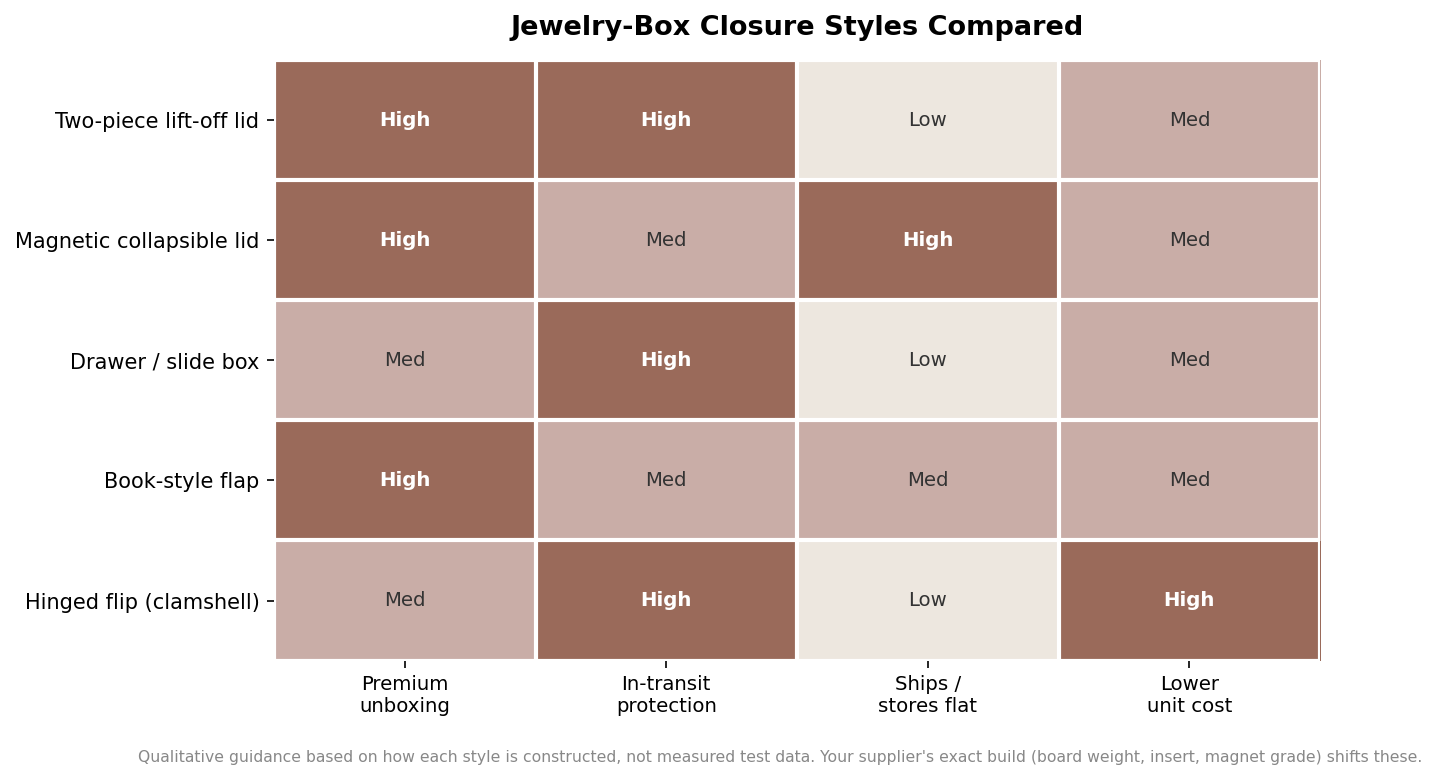
The matrix above is qualitative guidance drawn from how each style is built rather than lab measurement, and your supplier’s specific construction will move things. A drawer box with a heavier sleeve, or a magnetic box with a thicker board and a stronger magnet, changes the feel and the protection. Use it to narrow the field, then judge a physical sample.
Let shipping and sales channel break the tie
Once two or three styles fit the product, how the box moves through your business often decides between them. If you sell online and fulfill from a small space, the magnetic collapsible lid earns its keep, because boxes that ship and store flat can occupy a fraction of the volume of pre-assembled rigid boxes and lower your inbound freight. If your boxes sit on a retail counter and are handed across in person, a fully assembled two-piece lid or drawer box makes a stronger impression and the storage penalty matters less. For a mailed subscription or an item that will bounce around in a shipping carton, the enclosing protection of a lift-off lid or the cradled tray of a drawer box reduces the chance of a piece shifting in transit.
It is worth thinking one layer out, too. A rigid box is a presentation box, not a shipping box, and putting a bare rigid box in the mail scuffs the wrap and dents the corners. Most brands ship the jewelry box inside a plain corrugated mailer, which protects the finish and keeps the unboxing intact. Factor that second box into your cost and your packaging footprint from the start.
Nail these specs before you order
Whatever style you choose, a few details determine whether the finished box works. Size the interior to the insert, not just the item: a ring needs a slotted foam or a pillow, a necklace needs a flat pad with a hook or a bar, and the insert dimensions drive the box dimensions. Decide the wrap and the decoration, since foil stamping, embossing, and a spot finish each behave differently on paper versus fabric wraps. For magnetic styles, ask about the magnet grade, because a weak magnet undermines the whole closure and a very strong one can feel stubborn.
Finally, get quantities and timing on the table early. Rigid box runs often start at modest minimums, sometimes as low as a dozen for stock sizes with simple branding, while fully custom sizes and elaborate finishes carry higher minimums and longer production windows. Custom rigid packaging commonly takes on the order of two to four weeks to produce after artwork approval, and longer if it ships by sea, so plan backward from your launch or your gifting date. Where a firm price, minimum, or lead time matters to your decision, confirm it on a live quote for your exact spec rather than relying on a general range, because board weight, insert, finish, and quantity all move the number.
Leave a Reply